
SKU: DIV031-DIV
DIVERSA Protein Delivery Reagent (for 1 ml)
DIVERSA lipid nanoemulsions for promoting effective intracellular delivery of proteins
Description
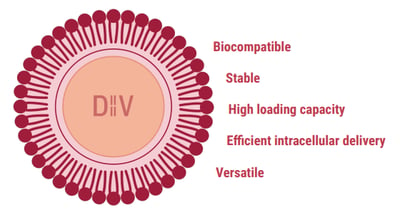
DIVERSA’s proprietary technology can efficiently achieve the intracellular delivery of therapeutic molecules. It is based on lipidic emulsions with an easily controllable size and a narrow distribution. There nanometric emulsions show great stability in different relevant biological fluids and biocompatibility with different cell types as well as in vivo models such as mouse, rat and zebrafish. They have high loading capacity and are versatile and capable of associating a wide variety of compounds as hydrophobic or amphiphilic small molecules, peptides, proteins, and oligonucleotides (such as DNA and RNA) showing great association efficacy and deliver them to their target site by overcoming biological barriers.
Benefits of DIVERSA's Nanoparticle Technology
- Biocompatible: With different cell types and in vivo models like mice, rat and zebrafish
- Stable: In different biological fluids, sera and cell culture media
- High loading capacity: Ensuring the desired therapeutic effect
- Efficient intracellular delivery: Overcoming biological barriers
- Versatile: Able to associate a wide variety of compounds as hydrophobic or amphiphilic molecules, peptides, proteins, and oligonucleotides (such as DNA and RNA, among others)
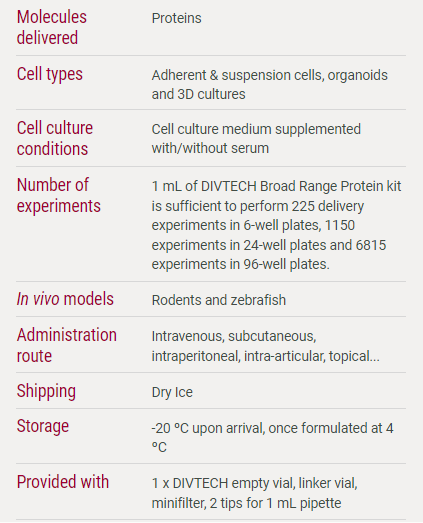
DIVERSA Protein Delivery Reagent, based on lipids carrying a reactive group, is suitable for click chemistry. A modification in your protein/s of interest is needed for the association to the formulation but it does not compromise its structure and activity. Azido (N3- group)-modified proteins will covalently react with the group exposed on the surface of the formulation by following easy and mild conditions.
Technical Information
Supporting Data
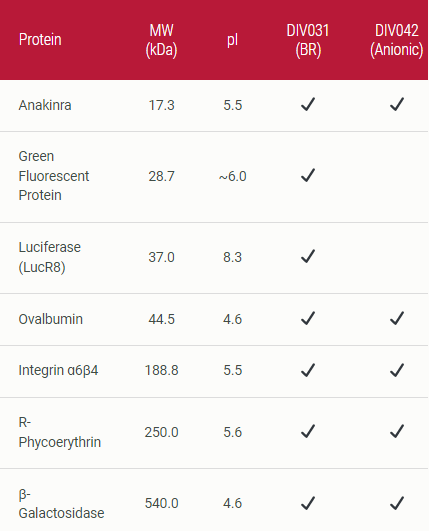
Table 1. Examples of proteins efficiently associated with DIVTECH and delivered to cells

Figure 1. Intracellular delivery of RLuc8 protein to L3.6pl cells. RLuc8 activity was measured after protein activation and detected by a luminometer. Signal was only detected (455 nm) after using DIVERSA Protein Delivery Reagent, showing that the protein was efficiently delivered.
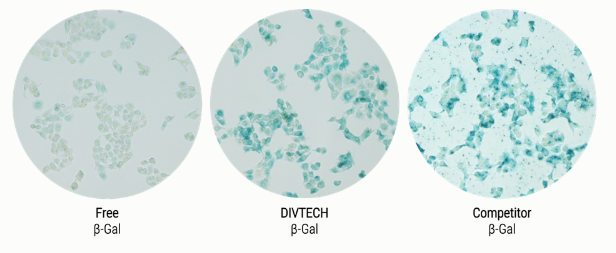
Figure 2. Intracellular delivery of the enzyme β-Galactosidase to L3.6pl cells using DIVERSA Reagent. The β-Galactosidase activity (blue signal) was significantly enhanced when delivered by DIVERSA Reagent and showed no toxic effects as compared to commercially available competitors where cell debris and changes in the cell morphology were observed.